
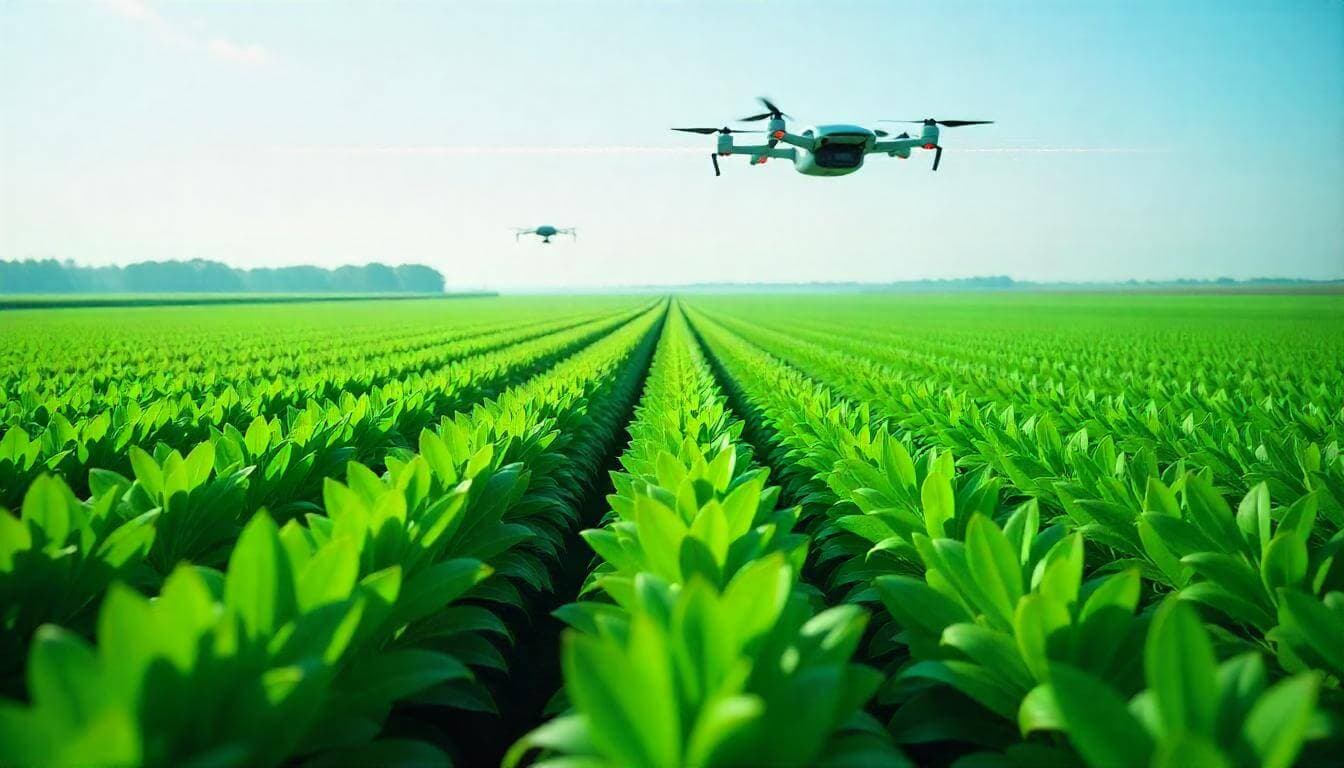
Global food demand continues to rise. Climate change impacts agriculture. Farmers face unprecedented challenges. However, technology offers solutions. A recent $70 million investment fuels an Agtech revolution. This initiative promises to sustainably double crop yields. This significant capital infusion could redefine farming practices. Ultimately, it aims to secure a more sustainable future for food production worldwide. We explore the profound implications of this development.
The Urgency for Innovation in Agriculture
The world population keeps growing. Experts predict nine billion people by 2050. This creates immense pressure on food systems. Simultaneously, climate change brings extreme weather. Droughts, floods, and unpredictable seasons threaten harvests. Traditional farming methods often strain resources. They can deplete soil health. They also consume vast amounts of water and chemicals.
Therefore, innovation in agriculture is urgent. Farmers need new tools. They must produce more food with fewer resources. They also need to minimize environmental impact. This situation demands solutions that enhance efficiency. It requires methods that promote sustainability. Thus, the current crisis creates a fertile ground for agricultural technology.
Understanding Modern Agtech: Pillars of Progress
Modern Agtech encompasses diverse technologies. These are central to the current Agtech revolution. Internet of Things (IoT) sensors are a key component. They gather real-time data from fields. This includes soil moisture, nutrient levels, and plant health. Artificial Intelligence (AI) analyzes this vast data. It provides actionable insights. Farmers receive precise recommendations for irrigation or fertilization.
Furthermore, robotics automate repetitive tasks. Drones can monitor crops from above. Autonomous tractors can plant and harvest. Biotechnology offers genetically optimized crops. These resist pests or tolerate harsh conditions. Vertical farming and controlled environment agriculture (CEA) maximize space. They reduce water use. Ultimately, these technologies work together. They create a more efficient and resilient agricultural system.
The $70 Million Investment: A Catalyst for Change
A recent $70 million investment represents a major catalyst. It directly supports this Agtech revolution. The funding came from a syndicate of venture capitalists. Leading institutional investors also participated. This capital targets a pioneering Agtech firm. This company specializes in AI-powered precision agriculture. Their platform integrates IoT data. It then uses machine learning to optimize every stage of crop growth.
This significant capital infusion will accelerate their research. It will also expand their market reach. The investment shows strong confidence. Investors believe in the firm’s ability to deliver on its promise. That promise is doubling crop yields sustainably. This funding also signals a broader trend. Investors increasingly recognize Agtech's vital role. It offers solutions for global food security and environmental challenges.
How Technology Doubles Crop Yields: Precision at Scale
This Agtech initiative employs several mechanisms to double crop yields. Precision farming plays a critical role. The system uses satellite imagery and drone data. It combines this with ground-based sensor readings. This creates highly detailed farm maps. Farmers then apply inputs precisely. They use only the required amount of water and fertilizer. This eliminates waste. It also reduces costs.
최적화된 관개 시스템은 AI를 활용합니다. 식물 뿌리에 직접 물을 공급합니다. 이는 증발과 유출을 최소화합니다. 첨단 해충 및 질병 관리 시스템은 AI를 사용합니다. 발병을 조기에 감지합니다. 그런 다음 표적 치료법을 권장합니다. 이는 광범위한 살충제 사용의 필요성을 줄입니다. 또한 생명공학은 종자 성능을 향상시킵니다. 더 높은 자연 저항력을 가진 작물을 개발합니다. 이러한 결합된 기술은 수확량을 크게 늘립니다. 자원 소비를 늘리지 않고 말입니다.
지속 가능성 확보: 더 친환경적인 농업 미래
7천만 달러 규모의 농업 기술 혁명은 지속 가능성을 강조합니다. 작물 수확량의 두 배 증가는 책임감 있게 이루어져야 합니다. 물 소비량 감소는 주요 이점입니다. 정밀 관개는 최대 50% 적은 물을 사용합니다. 이는 중요한 자원을 보존합니다. 비료 사용량도 줄어듭니다. AI 기반 권장 사항은 과도한 사용을 방지합니다. 이는 영양분 유출을 줄입니다. 그리고 수로 오염을 최소화합니다.
더욱이 살충제 사용 감소는 생물 다양성을 보호합니다. 유익한 곤충을 보호합니다. 또한 농부의 화학 물질 노출을 줄여줍니다. 향상된 토양 건강 관행이 더욱 실현 가능해집니다. 센서는 토양 상태를 모니터링합니다. 그들은 무경운 농업과 피복 작물을 포함한 재생 농업 기술을 안내합니다. 궁극적으로 이 투자는 환경 친화적인 관행을 지원합니다. 농업을 진정으로 더 친환경적인 미래로 이끌어갑니다. 생산성과 생태적 책임이 공존할 수 있음을 보여줍니다.
농부와 시장에 미치는 경제적 영향
이 농업 기술 이니셔티브의 경제적 영향은 상당합니다. 농부들은 더 높은 수확량으로 직접적인 혜택을 누립니다. 그들은 같은 면적의 토지에서 더 많은 식량을 생산합니다. 이것은 그들의 수입을 증가시킵니다. 투입 비용 감소 또한 수익성을 향상시킵니다. 농부들은 물, 비료, 살충제 비용을 절약합니다. 이는 크고 작은 농장 모두에 도움이 됩니다. 그리고 농업을 재정적으로 더 실행 가능하게 만듭니다.
시장의 경우 공급 증가는 식량 가격을 안정화할 수 있습니다. 기후 변화로 인한 변동성을 줄여줍니다. 더 풍성한 수확은 더 큰 식량 안보를 보장합니다. 공급망이 더욱 탄력적으로 변합니다. 이 혁신적인 기술은 또한 새로운 일자리 기회를 창출합니다. 농업 기술 부문 자체의 성장을 촉진합니다. 이는 농촌 지역 사회에 경제적 이익으로 이어집니다. 그리고 더 넓은 경제에도 이점을 제공합니다. 따라서 농업 기술 혁명은 생계와 시장 안정성을 향상시킵니다.
과제 및 미래 전망: 장애물 극복
그 약속에도 불구하고 농업 기술 혁명은 과제에 직면해 있습니다. 초기 투자 비용은 개별 농부에게 높을 수 있습니다. 자본과 훈련에 대한 접근이 매우 중요합니다. 정부와 금융 기관은 지원을 제공해야 합니다. 규제 장벽 또한 존재합니다. 새로운 생명공학과 데이터 개인 정보 보호 문제는 명확한 프레임워크를 요구합니다. 이러한 기술에 대한 공평한 접근을 보장하는 것도 중요합니다. 이는 농업에서 디지털 격차를 방지합니다.
그러나 미래 전망은 여전히 매우 낙관적입니다. AI와 로봇 공학의 지속적인 발전은 훨씬 더 큰 효율성을 약속합니다. 수직 농장과 도시 농업 솔루션이 인기를 얻을 것입니다. 그들은 식량 생산을 소비자에게 더 가깝게 가져올 것입니다. 기후 탄력적 작물이 더욱 흔해질 것입니다. 이는 변화하는 환경 조건에 농업을 적응시킬 것입니다. 결국 이 7천만 달러 투자는 전환점을 알립니다. 농업을 전례 없는 생산성과 환경 관리의 시대로 이끌어갑니다.
글로벌 식량 안보를 위한 교훈: 협력적인 길
This $70 million initiative offers vital lessons for global food security. Firstly, private investment plays a crucial role. It complements public research. Secondly, interdisciplinary approaches are essential. Combining agriculture, AI, and environmental science yields the best results. Policymakers must create supportive environments. This includes incentives for sustainable farming practices. It also requires investments in rural digital infrastructure.
Furthermore, education and farmer adoption are key. New technologies only succeed if farmers understand and use them. Training programs and demonstration farms are necessary. Collaboration across the entire food value chain is also critical. This includes researchers, farmers, tech providers, and consumers. Ultimately, this Agtech revolution shows what is possible. It lights a path toward feeding a growing population sustainably. It provides a blueprint for future global food efforts.
Conclusion: A Sustainable Future for Food
The $70 million investment in Agtech marks a profound shift. It spearheads a revolution in how we produce food. This financial backing fuels innovation. It brings advanced technologies to the field. Consequently, it promises to sustainably double crop yields. This initiative addresses pressing global challenges. These include food security, resource scarcity, and climate change. The future of agriculture looks brighter. It will be more productive. It will also be more environmentally responsible. This Agtech revolution secures a sustainable future for generations to come.