
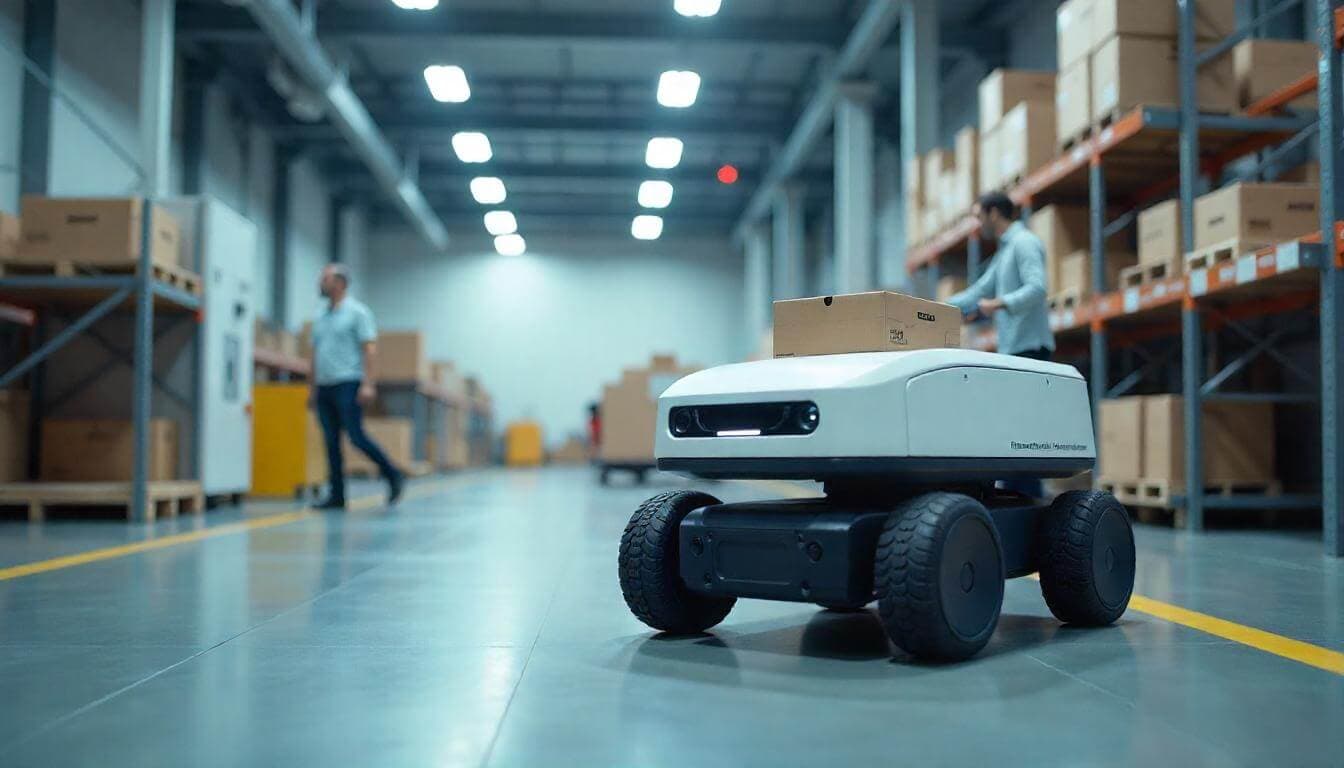
The relentless pursuit of efficiency and precision is transforming global industries. Automation, powered by advanced robotics, stands at the forefront of this revolution. From manufacturing floors to logistics warehouses, intelligent machines are redefining productivity and operational capabilities. A recent $60 million robotics deal, spearheaded by the investment firm CVFF, marks a significant acceleration of this trend. This substantial funding is now enabling the widespread automation of industries, promising unprecedented levels of efficiency, safety, and innovation across diverse sectors. This article examines a major financial transaction (over $50 million) that is fundamentally reshaping industrial landscapes worldwide.
The Imperative for Automation: Addressing Industrial Challenges
Modern industries face a complex array of challenges. Labor shortages in critical sectors, the increasing demand for higher quality and faster production, and the need for enhanced safety in hazardous environments all point towards automation as a crucial solution. Traditional manual processes, while foundational for decades, often struggle to meet the scale, speed, and consistency required by today's global economy. This creates bottlenecks, increases operational costs, and limits growth potential.
Furthermore, industries are under constant pressure to innovate and remain competitive. Implementing advanced robotics allows companies to reallocate human workers to higher-value tasks. It also improves overall operational resilience. Consequently, the drive to automate is no longer merely a matter of efficiency; it is a strategic imperative for long-term viability and market leadership.
The Rise of Industrial Robotics: Intelligence Meets Mechanics
Industrial robotics has evolved dramatically from simple, repetitive arms to sophisticated, intelligent systems. Modern robots are equipped with advanced sensors, computer vision, and artificial intelligence. These capabilities allow them to perform complex tasks with remarkable precision, adapt to changing environments, and even collaborate safely with human co-workers. This fusion of mechanics and intelligence unlocks new possibilities for automation.
Beyond traditional manufacturing, robots are now deployed in logistics for sorting and picking, in healthcare for surgical assistance, and in agriculture for harvesting and monitoring. Their ability to handle dangerous, dull, or dirty tasks enhances workplace safety and improves overall productivity. This continuous innovation in robotics makes them an increasingly attractive solution for a wide range of industrial applications.
CVFF’s $60 Million Robotics Deal: A Strategic Move
CVFF’s $60 million robotics deal is specifically targeting companies that develop and deploy autonomous mobile robots (AMRs) and collaborative robots (cobots) for industrial applications. This investment is set to accelerate the adoption of these advanced robotic solutions across manufacturing, warehousing, and intralogistics sectors. The significant capital infusion will enable the portfolio companies to scale their production, expand their R&D efforts, and penetrate new markets globally. This transaction underscores CVFF's strategic vision to capitalize on the automation megatrend.
The funding will primarily be used for enhancing robotic AI capabilities, improving navigation systems, and developing more sophisticated human-robot interaction interfaces. A portion will also support global sales and deployment teams. This substantial backing positions the recipient companies to become leaders in their respective automation niches. Ultimately, it allows them to bring next-generation robotic solutions to a wider industrial audience.
工业自动化:变革制造业
长期以来,制造业一直走在采用机器人技术的前沿,但这项价值6000万美元的机器人交易正在突破新的界限。先进的机器人现在执行的任务远远超出了简单的组装。它们包括复杂的焊接、精密加工和复杂的质量检验。人工智能驱动的视觉系统使机器人能够以微观精度识别缺陷,从而确保更高的产品质量并减少浪费。
此外,协作机器人 (cobots) 与人类操作员并肩工作。它们处理体力要求高或重复性的任务。这使人类工人能够专注于更复杂的解决问题和创造性工作。机器人自动化还允许生产线具有更大的定制性和灵活性。工厂可以快速重新配置以生产不同的产品变体。这种适应性在当今快速变化的消费市场中至关重要。
通过机器人技术简化物流和仓储
由于机器人技术的出现,物流和仓储行业正在经历深刻的变革。电子商务的增长极大地增加了对更快、更准确的履行的需求。自主移动机器人 (AMR) 正在彻底改变仓库运营。它们以最少的人工干预来运输货物、分拣包裹和管理库存。AMR 在动态环境中导航,避开障碍物并实时优化路线。
这项机器人交易直接推动了这些 AMR 在大型配送中心中的部署。它们大大减少了订单拣选和包装所需的时间和人力。此外,机器人分拣系统每小时可以处理数千件商品,从而确保快速交付给客户。通过自动化这些关键的物流功能,公司可以实现无与伦比的效率和吞吐量水平。因此,他们可以满足现代供应链不断增长的需求。
提高运营中的安全性和精度
除了效率之外,工业自动化(特别是通过机器人技术)还可以显着提高工作场所的安全性。机器人可以在对人类工人来说很危险的危险环境中执行任务。这包括处理重物、使用有毒材料或在极端温度下操作。通过承担这些风险,机器人可以保护人类生命并减少工伤事故的发生。
此外,机器人提供了无与伦比的精度和一致性。与可能出现疲劳或变异性的人工操作员不同,机器人每次都以相同的精度执行重复性任务。这可以提高产品质量并减少错误,尤其是在需要严格标准的行业中。对安全性和精度的关注是各行业越来越多地采用机器人解决方案的关键驱动因素。
对企业的经济和战略影响
集成先进机器人技术的经济效益非常引人注目。采用这些技术的企业通常会显着降低运营成本。这包括重复性任务的较低劳动力成本以及由于精度提高而减少的浪费。生产力也显着提高。机器人系统可以24/7全天候运行,从而提高吞吐量并加快产品上市时间。
从战略角度来看,采用自动化可以增强公司的竞争优势。它可以提高生产的敏捷性。它还能够更快地响应市场需求。此外,投资先进的机器人技术可以将公司定位为行业领导者。这会吸引顶尖人才并加强他们的品牌声誉。因此,这笔 6000 万美元的机器人交易使企业不仅能够生存,而且能够在不断发展的工业格局中蓬勃发展。
应对挑战和未来展望
虽然工业自动化的优势显而易见,但挑战依然存在。机器人系统的初始资本投资可能相当大。将新的机器人解决方案与现有的旧有基础设施集成需要仔细的规划和技术专长。此外,确保劳动力具备管理和维护这些先进系统所需的必要技能至关重要。这通常需要对培训和技能提升计划进行大量投资。
然而,工业机器人技术的发展轨迹是明确的:持续增长和日益复杂。未来的创新可能包括更多功能的机器人、用于预测性维护的增强型人工智能能力以及无缝的人机协作。这笔 6000 万美元的机器人交易是一个强有力的例子,说明战略投资如何加速这些变革性技术的采用。它推动各行各业朝着更加自动化、高效和创新的未来发展。
结论:工业自动化的新时代
CVFF 的 6000 万美元机器人交易代表着全球迈向工业自动化的重要里程碑。通过将大量资金投入到尖端的机器人解决方案中,这项投资从根本上改变了制造业、物流和其他关键领域。它培养了前所未有的效率水平,提高了工作场所的安全性,并推动了持续创新。对先进机器人技术的这一承诺不仅仅是关于技术进步,而是为了为未来建设更具弹性、生产力和竞争力的行业。这项战略性资金无疑正在开启一个自动化新时代,重塑全球商业的结构。