
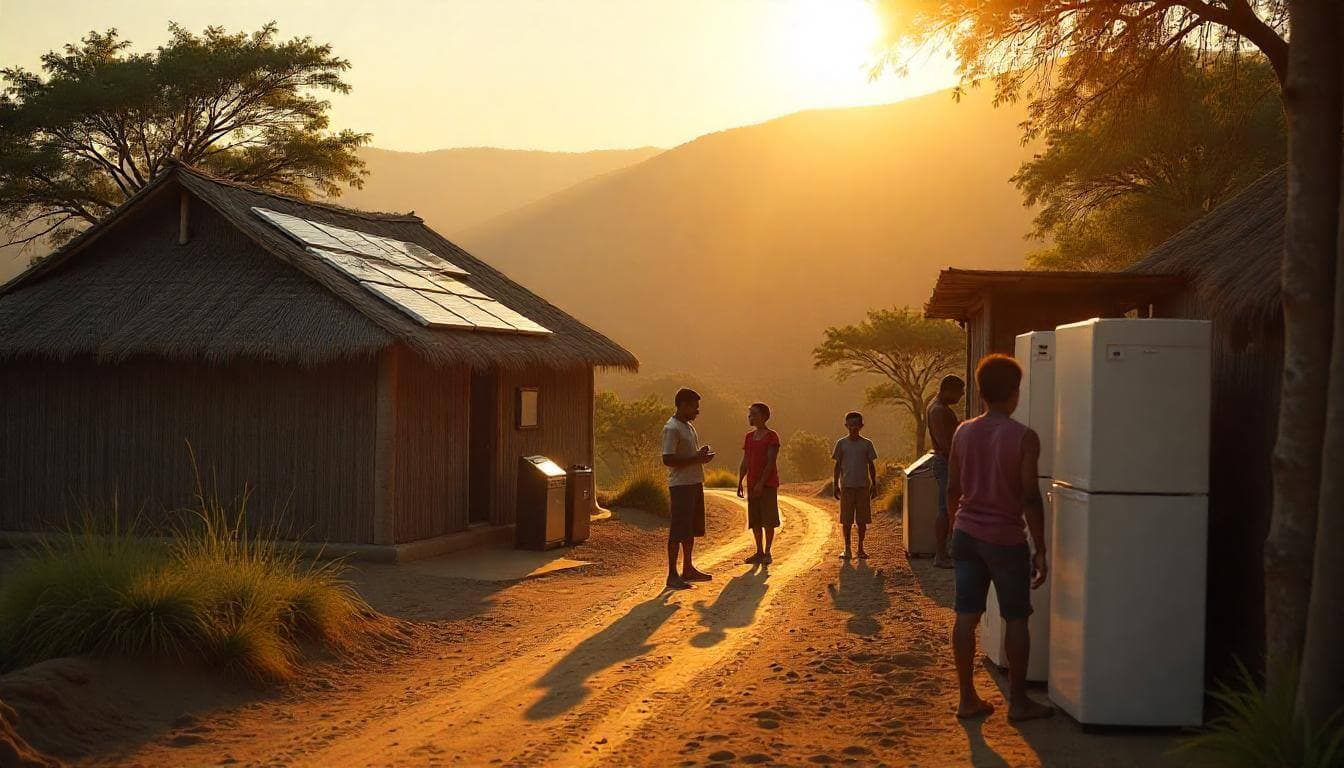
Access to reliable and affordable energy remains a critical development challenge for millions globally. Especially in remote communities, geographic isolation often makes connection to centralized power grids economically unfeasible. Many rural areas therefore rely on inefficient, costly, and polluting sources like diesel generators. A recent $55 million investment in a renewable energy startup represents a pivotal step toward closing this energy gap. This substantial funding is specifically dedicated to scaling distributed renewable energy solutions. It is designed to provide sustainable, resilient power to underserved populations. This article examines a significant financial transaction (over $50 million) that is driving rural electrification and fostering community empowerment.
The Challenge of Energy Access in Remote Areas
The lack of consistent electricity severely hinders economic and social development in remote communities. Without electricity, essential services like healthcare, education, and sanitation are difficult to sustain. Furthermore, economic activities are often restricted to daylight hours. Traditional energy sources, typically diesel or kerosene, are not only environmentally harmful but also expensive to transport and maintain in isolated locations. This reliance creates a cycle of poverty and dependence.
Moreover, extending national grids to these areas faces immense infrastructural and financial barriers. The low population density in many remote regions makes conventional grid expansion prohibitively expensive for utilities. Consequently, these communities remain disconnected. There is an urgent need for decentralized, cost-effective solutions that can harness local resources to meet energy demands. This need has driven the rapid growth of distributed renewable energy systems.
The Rise of Distributed Renewable Energy
Distributed energy systems, particularly those utilizing solar and wind power, offer a perfect fit for remote electrification. These systems generate electricity at or near the point of consumption. They eliminate the need for expensive, long-distance transmission infrastructure. Solar photovoltaic (PV) systems, in particular, are proving highly effective due to their modularity and ease of deployment. They transform sunlight into a consistent power supply.
Microgrids and standalone solar home systems (SHS) are central to this transformation. Microgrids are localized power networks that can operate independently of the main grid. They provide reliable power to a cluster of homes or a small village. SHS offer individual households immediate access to lighting and power for basic appliances. Both technologies leverage the decreasing costs of solar panels and battery storage. They provide a scalable pathway to electrification.
The $55 Million Investment: Scaling Solutions
This $55 million investment in a renewable energy startup is focused on accelerating the deployment of these distributed solutions across diverse remote regions. The funding, provided by a consortium of impact investors and development banks, aims to expand the startup’s operational capacity significantly. This transaction demonstrates strong confidence in the commercial viability of off-grid renewable energy models. It also reflects a growing commitment to sustainable development goals.
此次注资将策略性地用于几项关键举措。它将支持新建微电网和扩大太阳能家用系统分销网络。此外,该投资还将资助技术研发。它还将为创新的商业模式提供资金,例如按需付费(PAYG)融资。这种方法通过分期支付成本,使低收入社区更容易负担清洁能源的费用。
微电网:构建本地能源独立性
微电网通过提供本地能源独立性,正在改变偏远社区。这些系统通常整合太阳能电池板、储能解决方案(电池)和智能管理技术。它们确保稳定可靠的电力供应,减轻太阳能或风能固有的间歇性。当与电池储能相结合时,微电网可以提供全天候电力,这对于现代生活至关重要。
可靠的电力可以显著提高社区的抗灾能力。与容易受到大规模故障或极端天气事件影响的集中式电网不同,微电网可以“孤岛化”自身。它们可以在停电期间继续独立运行。这种能力对于维持关键服务尤为重要。它可以确保医疗诊所和净水系统的电力供应。这项可再生能源初创企业投资的一个关键成果是加强了当地能源基础设施。
经济和社会转型
电气化对偏远社区的影响是深刻且多方面的。在经济方面,获得可靠的电力可以刺激当地的创业精神。它使小型企业能够延长营业时间。它还有助于使用提高生产力的机械。这导致了就业机会的创造和收入水平的提高。此外,电气化还支持现代农业。它为灌溉系统和易腐货物冷藏提供动力。
在社会方面,益处同样显著。持续的照明使学生可以在天黑后学习,从而提高教育成果。获得电力可以为医疗设备和电信提供动力。这增强了医疗保健服务并改善了连通性。通过提供可持续能源,这家可再生能源初创企业不仅仅是安装太阳能电池板,而且还在为社区的长期发展和繁荣奠定基础。
克服挑战:融资和可持续性
虽然好处显而易见,但在偏远地区部署可再生能源面临着特定的挑战。太阳能系统和微电网的高额前期安装成本通常是一个巨大的障碍。此外,还需要发展当地的维护和技术支持能力。确保这些系统的长期可持续性需要仔细的规划和社区参与。
5500 万美元的投资通过有针对性的策略来解决这些问题。PAYG 模式的部署降低了家庭的初始财务负担。它使那些无法获得传统信贷的人可以获得清洁能源。此外,这家初创公司正专注于培训当地技术人员。这确保了系统可以由社区成员维护。这种方法培养了一种主人翁意识。它保证了能源基础设施的寿命。
乡村电气化的未来
乡村电气化的未来无疑是分散化和可再生的。随着太阳能和风能技术的成本持续下降,分布式系统正变得越来越具有与传统能源竞争的优势。电池技术的创新进一步提高了微电网的可靠性。这些进步使获得可持续能源比以往任何时候都更容易实现。
This $55 million renewable energy startup is a strong example of how private capital can play a crucial role in achieving global energy goals. Continued investment in this sector will be essential for scaling these solutions globally. It will also ensure that no community is left behind in the transition to a clean energy future. The success of these initiatives provides a powerful blueprint for future efforts in sustainable development.
Conclusion: A Brighter Future Through Clean Energy
The $55 million investment in this renewable energy startup marks a transformative moment for remote communities. By leveraging solar and wind technology, this funding is providing reliable, clean power to areas that have historically been overlooked. It is driving economic growth, improving health outcomes, and enhancing educational opportunities. This commitment to sustainable energy access demonstrates a clear path toward a more equitable and resilient global energy system. The initiative underscores the power of targeted investment to create a brighter, cleaner future for all.