
The global economy has long operated on a linear model: "take, make, and waste." This unsustainable approach depletes resources and generates massive environmental pollution. Yet, a fundamental shift is underway. The circular economy (CE) aims to decouple economic growth from resource consumption. It focuses instead on regenerating nature and eliminating waste by design. A recent $50 million green tech deal provides a powerful catalyst for this transformation. This significant investment is leveraging innovative technology to accelerate the transition to a circular model, fundamentally altering how industries manage materials and resources. This article examines a crucial financial transaction (over $50 million) that is powering the future of sustainable development.
The Imperative for Circularity: Escaping the Linear Trap
Our current economic system relies heavily on extracting finite resources. This leads to a continuous cycle of production and disposal. Consequently, we face accelerating environmental crises, including climate change and biodiversity loss. The linear model is not only environmentally damaging; it is also economically inefficient. Valuable materials are simply discarded. This approach fails to recognize the inherent value of products after their initial use.
A circular economy, by contrast, is restorative and regenerative by design. It aims to keep products, materials, and components in circulation for as long as possible. This approach maximizes resource efficiency. Furthermore, it creates new business opportunities in areas like reuse, repair, and recycling. Transitioning to a circular system is essential for long-term sustainability. It offers a viable pathway for addressing global challenges.
Green Technology as a Catalyst for Circular Economies
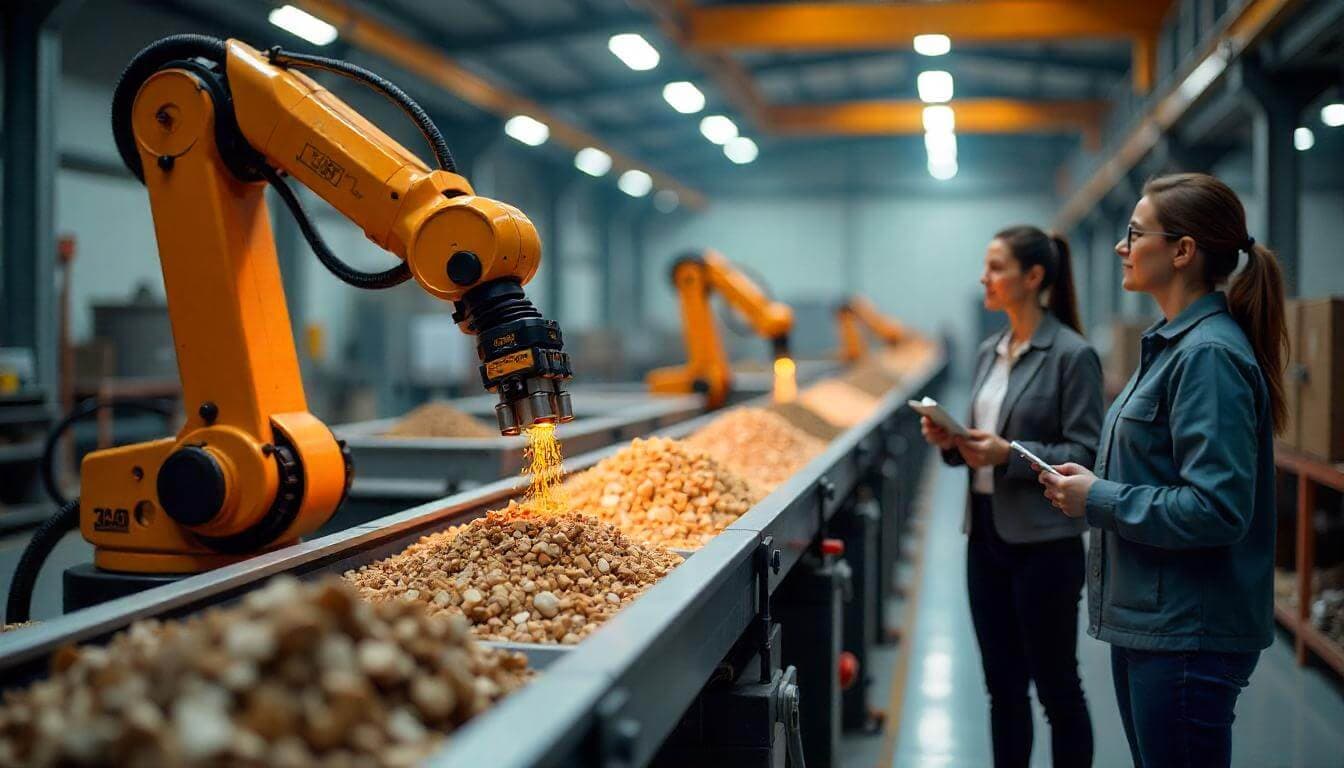
Green technology serves as the indispensable engine driving the circular economy transition. These innovations provide the tools needed to close the loops in industrial processes. They also enable the efficient management of waste. For instance, advanced sorting technologies powered by artificial intelligence dramatically improve recycling rates. This ensures high-quality materials are recovered and re-enter the supply chain.
Moreover, green tech includes sophisticated systems for waste-to-energy conversion and sustainable material production. Companies utilize technologies for efficient water purification and energy recovery. These methods reduce the environmental footprint of production processes. Ultimately, green technologies make circular models economically feasible. They transform waste into valuable resources, creating new revenue streams and fostering a more resilient economy.
The $50 Million Green Tech Deal: A Strategic Overview
This $50 million green tech deal is supporting a company focused on circular solutions for industrial waste streams. The investment targets innovative technologies that turn hard-to-recycle materials into reusable components or valuable energy sources. This funding aims to accelerate the deployment of these technologies across multiple sectors, including manufacturing and construction. The deal, spearheaded by a coalition of environmental investors and industrial partners, underscores a commitment to practical, scalable solutions.
The capital will primarily finance the expansion of automated sorting and processing facilities. It will also support the development of novel recycling chemistries. Furthermore, it will fund research into regenerative material science. This substantial investment is expected to significantly enhance resource efficiency. It promises to divert thousands of tons of waste from landfills annually. It therefore represents a pivotal moment in the drive towards a functional circular economy.
废物管理和资源回收的创新
这项绿色技术交易的核心内容涉及废物管理方面的突破性进展。传统的回收方法通常难以处理复杂的材料,也难以处理混合的废物流。然而,这项投资支持了利用先进传感器和机器人的技术。这些工具能够以前所未有的精度识别和分离材料,从而提高回收材料的纯度。而这种纯度对于高价值制造至关重要。
此外,这项交易的重点是将有机废物转化为能源或富含营养物质的堆肥。这消除了垃圾填埋场的甲烷排放,并再生了自然系统。该公司采用了先进的生物消化工艺。这些工艺捕获沼气用于可再生能源生产,并生产有机肥料。这种整体方法确保了最小的废物产生,并最大限度地利用资源,将废物从循环系统中的负债转化为宝贵的资产。
推动各工业部门的资源效率
这笔 5000 万美元的绿色技术交易不仅限于废物处理,还在推动工业运营中的资源效率。通过为各行业提供监测和管理资源消耗的工具,该技术优化了生产流程,减少了能源使用,并最大限度地减少了用水量。例如,智能制造系统使用实时数据来识别低效率并防止材料损失。
各公司可以从降低运营成本中受益,还可以提高其环境绩效。这种竞争优势鼓励更广泛地采用循环实践。此外,该技术促进了工业共生。这使得一家公司的废物可以成为另一家公司的原材料。这种合作加强了区域经济,并减少了整体资源消耗。因此,这项投资对整个工业领域的可持续性产生了复合效应。
克服挑战:从线性习惯到循环系统
从线性系统转型到循环系统涉及重大挑战。已建立的商业模式通常抵制变革。实施新的绿色技术的初始成本可能很高。此外,许多地区的监管框架和市场激励措施仍在不断发展。说服各行业投资于长期的环境解决方案,而不是短期的利润,需要转变思维模式。
这笔 5000 万美元的绿色技术交易有助于减轻这些障碍。它提供了必要的资本来降低创新技术的风险,并证明了其大规模的经济可行性。此外,这项投资为成功的循环商业模式创建了一个展示平台,鼓励其他公司效仿。通过展示盈利能力以及环境效益,该交易有助于克服阻力,并加速全面采用循环实践。
循环经济的经济和环境效益
转向循环经济带来了巨大的好处。在环境方面,它可以显著减少温室气体排放,节约自然资源,并最大限度地减少污染。这些成果对于实现全球气候目标至关重要。在经济方面,循环模式在回收、翻新和可持续制造等领域创造了新的就业机会,并减少了对不稳定的原材料市场的依赖。
A robust circular economy fosters local resilience. It strengthens supply chains. Businesses that embrace circularity often find they are more innovative and efficient. They also attract environmentally conscious customers. Therefore, the return on this green tech deal is measured not just in financial terms. It also accounts for substantial environmental and social gains. It underscores that sustainability is a pathway to economic prosperity.
The Future of Green Technology and the Circular Economy
The momentum towards circular economies is building rapidly. Future green technologies will likely be even more integrated and intelligent. Digitalization, including the Internet of Things (IoT) and blockchain, will enhance transparency in supply chains. It will also improve resource tracking. AI will continue to revolutionize recycling and predictive maintenance. This will extend product lifecycles.
This $50 million green tech deal is just one example of the necessary investment required. Continuous funding for R&D and implementation will be critical for scaling these solutions globally. As technology advances and policy frameworks mature, circular economies will become the new standard. This will lead to a cleaner, more resilient, and ultimately more sustainable future for generations to come.
Conclusion: A Transformative Investment in Sustainability
The $50 million green tech deal is a crucial milestone in the journey towards a circular economy. By funding innovative technologies that eliminate waste and optimize resource use, this investment is driving a fundamental transformation in how we produce and consume goods. It demonstrates that financial success and environmental responsibility can go hand in hand. This commitment to green technology is essential for building a sustainable future. It provides the resources needed to realize the potential of circular economies worldwide. This proactive approach ensures a healthier planet and a more resilient global system.