
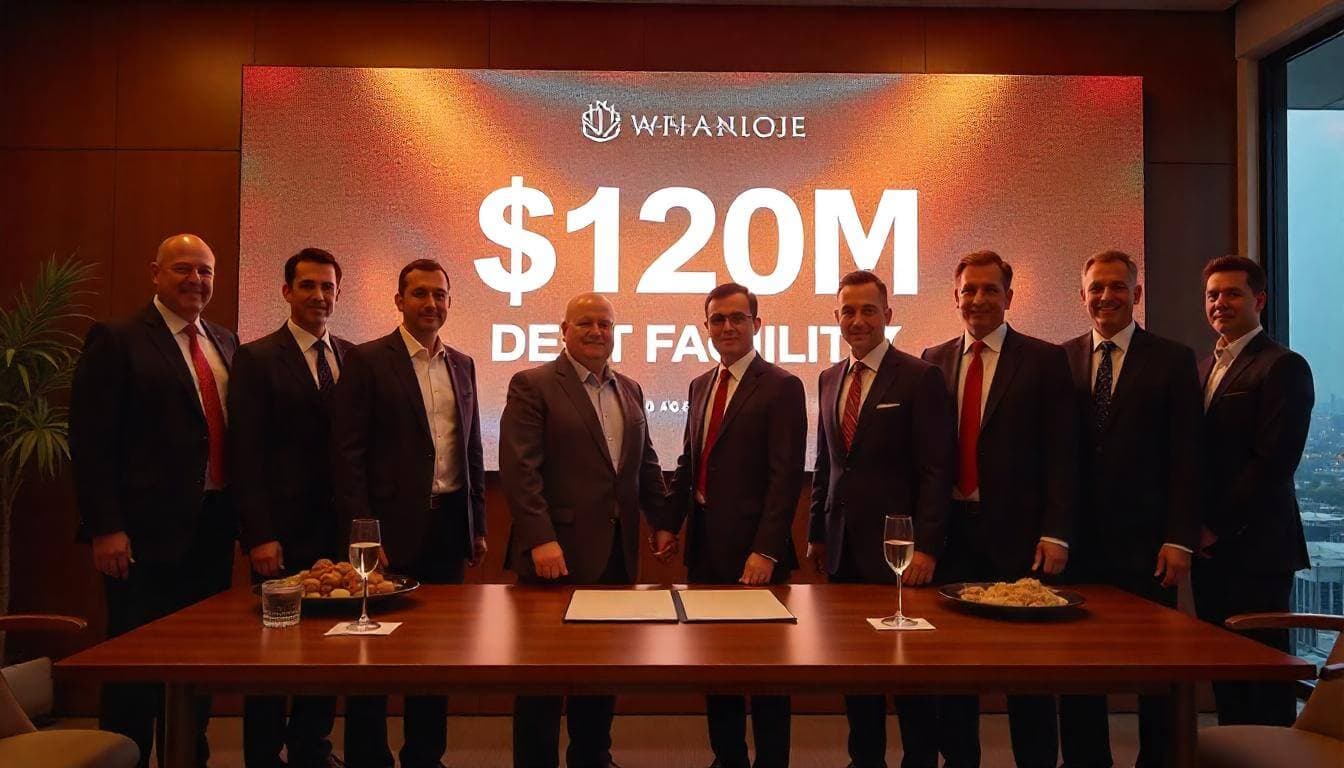
In the competitive world of digital marketplaces, a debt facility can provide the capital needed to scale without diluting ownership. A $120 million debt facility recently propelled a marketplace leader we’ll call “MarketConnect” into new global markets, strengthening its position as a top player in e-commerce connectivity. By leveraging non-dilutive financing, MarketConnect expanded its platform, enhanced technology, and deepened its ecosystem. This article explores the mechanics of the debt facility, its role in MarketConnect’s growth, and the lessons for marketplace businesses aiming to go global.
The Power of a Debt Facility in Marketplaces
A debt facility is a flexible financing arrangement where a company borrows capital, typically repaid over time with interest, without giving up equity. For digital marketplaces, which often have predictable revenue streams, this model is ideal for funding growth initiatives like international expansion or tech upgrades. Unlike equity rounds, debt facilities preserve founder control, making them attractive for firms with strong cash flows.
MarketConnect secured its $120 million debt facility from a consortium of lenders, including Hercules Capital, to support its global ambitions. The process involved rigorous due diligence, with lenders analyzing metrics like ARR, customer retention, and market potential. As a result, the facility provided MarketConnect with immediate capital, repayable as a percentage of revenue, aligning with its cyclical cash flows.
MarketConnect’s $120 Million Debt Facility
MarketConnect, a platform connecting buyers and sellers across retail and logistics, used the $120 million debt facility to fuel its international expansion. With $100 million in ARR and a 35% growth rate, the company was well-positioned to scale. However, entering new markets required significant investment in technology, partnerships, and local operations. The debt facility offered a non-dilutive solution, enabling MarketConnect to pursue growth while maintaining ownership.
Structuring the Debt Financing Deal
The $120 million facility was structured as a revolving credit line, allowing MarketConnect to draw funds as needed up to the limit. Repayments were tied to 5% of monthly revenue, with a 1.2x repayment cap, totaling $144 million. The deal, led by Hercules Capital, required no personal guarantees, relying on MarketConnect’s financial performance. This flexibility ensured the company could manage repayments during market fluctuations, making the debt facility a strategic fit.
Strategic Deployment of Funds
MarketConnect allocated the funds to three priorities. First, $50 million went to technology upgrades, enhancing AI-driven matching algorithms to improve buyer-seller connections. Second, $40 million supported entry into Southeast Asia and Latin America, regions with growing e-commerce demand. Finally, $30 million strengthened partnerships with logistics providers, streamlining cross-border transactions. These initiatives boosted MarketConnect’s ARR by 20% within nine months, validating the debt facility’s impact.
Why Debt Facilities Work for Marketplaces
Digital marketplaces thrive on network effects and recurring revenue, making them prime candidates for debt financing. Let’s examine why this model suits the sector.
Predictable Revenue Streams
MarketConnect 等平台产生稳定的交易费用,提供偿还债务所需的现金流。凭借 92% 的客户留存率,MarketConnect 让贷款方对其偿还能力充满信心。因此,债务融资使平台能够在不进行风险投资的股权权衡的情况下实现规模化。
可扩展的增长潜力
平台可以通过进入新的地区或垂直领域来快速扩张。债务融资使 MarketConnect 能够在不稀释所有权的情况下进入东南亚 2000 亿美元的电子商务市场。这种可扩展性吸引了贷款方,他们看到了交易量增长带来的高回报。
运营灵活性
与定期贷款不同,债务融资提供灵活的还款方式。MarketConnect 基于收入的还款方式根据季节性电子商务趋势进行调整,从而保持流动性。此外,该融资的循环性质使公司可以根据需要获得资金,从而支持动态增长计划。
债务融资如何改变 MarketConnect
1.2 亿美元的债务融资重塑了 MarketConnect 的发展轨迹,推动了运营和战略的进步。
推进技术创新
5000 万美元的技术投资增强了 MarketConnect 的平台,引入了人工智能工具,将交易时间缩短了 15%。这些升级吸引了更大的商家,使交易量增加了 25%。通过优先发展技术,MarketConnect 加强了其在平台领域的竞争优势。
加速全球扩张
进入东南亚和拉丁美洲使 MarketConnect 的收入来源多样化,减少了对北美市场的依赖。该公司对其平台进行了本地化,与 GrabPay 等区域支付系统集成。在六个月内,国际收入占 ARR 的 30%,证明了债务融资在全球增长中的作用。
深化生态系统合作伙伴关系
分配给合作伙伴关系的 3000 万美元加强了 MarketConnect 的物流网络,将运输时间缩短了 20%。与 DHL 等公司的合作提高了可靠性,吸引了企业客户。因此,债务融资加强了 MarketConnect 的生态系统,推动了网络效应。

1.2 亿美元债务融资的市场影响
MarketConnect 的债务融资影响了更广泛的平台生态系统,树立了新的趋势和标准。
使债务融资正常化
该交易凸显了债务融资是股权融资的可行替代方案。2024 年,平台公司获得了 20 亿美元的债务融资,比 2023 年增长了 15%。Omio 等公司筹集了 1.2 亿美元的债务融资用于旅游预订,紧随 MarketConnect 的步伐,表明了一种转向非稀释性资本的趋势。
吸引新的贷款方
MarketConnect 的成功吸引了专业贷款方进入平台领域。Neuberger Berman 等公司支持了 Tala 的 1.5 亿美元融资,推出了针对电子商务平台的基金。这种资本涌入正在扩大中型平台的融资选择。
驱动电子商务创新
由债务融资支持的人工智能升级为市场技术树立了标杆。像Buyerlink这样获得4100万美元融资的竞争对手也投资了类似的工具,提高了行业标准。 这股创新浪潮正在提升整个电子商务的用户体验。
市场领导者的经验教训
MarketConnect的经验为考虑债务融资的市场公司提供了可操作的见解。
优化财务指标
贷款人优先考虑MarketConnect 35%的增长率和高留存率。市场公司应保持强劲的指标,如净美元留存率在115%以上,以获得有利的债务条款并证明其偿还能力。
将资金与增长保持一致
MarketConnect将债务融资与ARR驱动计划(如全球扩张)联系起来。公司应将资金分配给高投资回报率的项目,确保在最大限度地实现增长的同时,偿还仍可持续。
协商灵活的条款
基于收入的还款结构帮助MarketConnect应对电商波动。 市场领导者应寻求灵活的条款,例如可调整的还款百分比,以在市场低迷期间保持流动性。
利用数据透明度
MarketConnect与Stripe和Shopify集成的实时分析建立了贷款人的信任。 公司必须投资于强大的跟踪系统,以提供清晰的财务见解,加快融资审批。
建立战略合作伙伴关系
MarketConnect的物流合作伙伴关系增强了其融资案例。 市场公司应与生态系统参与者建立联盟,以提高信誉并吸引贷款人。
债务融资的挑战
债务融资带有风险。 如果增长放缓,高额还款上限(如MarketConnect的1.2倍)可能会给财务带来压力。 过度依赖债务可能会阻止未来的股权投资者,因为风险投资家更喜欢干净的资产负债表。 此外,与贷款人共享财务数据会引起隐私问题,需要遵守GDPR。 市场公司必须在这些风险与债务融资的收益之间取得平衡。
市场中债务融资的未来
MarketConnect 1.2亿美元的债务融资突显了债务资金在市场增长中日益重要的作用。 随着全球电子商务预计到2028年将达到8万亿美元,市场需要灵活的资本才能参与竞争。 人工智能驱动的承销和嵌入式融资等趋势将简化债务获取,而与金融科技公司的合作伙伴关系将使较小平台的融资大众化。 随着债务融资成为主流,它们将重塑市场的规模和创新方式。
结论
1.2亿美元的债务融资改变了MarketConnect,使其能够在不稀释股权的情况下进行全球扩张和技术进步。 通过利用可预测的收入、灵活的还款方式和战略投资,MarketConnect为市场增长树立了新标准。 它的成功为公司提供了一个路线图,强调指标、协调和伙伴关系。 随着债务融资越来越受欢迎,它将推动市场领域下一波的创新和扩张。